Material Analysis
NiCr Nichrome heating strip is a nickel-chromium resistance alloy well-known for its excellent oxidation resistance, high strength, and stable performance at elevated temperatures. Typically, it contains 80% nickel and 20% chromium (Ni80Cr20) or other ratios like Ni60Cr15, depending on the application. The alloy offers superior corrosion resistance, minimal deformation under heat, and long-term stability, making it ideal for industrial furnaces, electric heaters, and various heating systems.
Industry Trends
The global demand for NiCr Nichrome strips continues to rise as industries shift toward energy-efficient and durable heating systems. With increased automation and temperature control precision, manufacturers prefer stable and long-life heating alloys like NiCr. Emerging markets, particularly in Asia and Europe, are investing in furnace upgrades using high-performance resistance materials. Moreover, the move toward renewable energy and green manufacturing highlights the importance of alloys that minimize energy waste and environmental impact.
Alloy Nomenclature Performance | 1Cr13Al4 | 0Cr25Al5 | 0Cr21Al6 | 0Cr23Al5 | 0Cr21Al4 | 0Cr21Al6Nb | 0Cr27Al7Mo2 |
Chemical Compostion (%) | Cr | 12.0-15.0 | 23.0-26.0 | 19.0-22.0 | 20.5-23.5 | 18.0-21.0 | 21.0-23.0 | 26.5-27.8 |
Al | 4.0-6.0 | 4.5-6.5 | 5.0-7.0 | 4.2-5.3 | 3.0-4.2 | 5.0-7.0 | 6.0-7.0 |
Re | Opportune | Opportune | Opportune | Opportune | Opportune | Opportune | Opportune |
Fe | Rest | Rest | Rest | Rest | Rest | Rest | Rest |
| -- | -- | -- | -- | -- | -- | -- |
Max.Continuous service temp. of element |
950 |
1250 |
1250 |
1250 |
1100 |
1350 |
1400 |
Resistivity at 20C(μΩ.m) | 1.25 | 1.42 | 1.42 | 1.35 | 1.23 | 1.45 | 1.53 |
Density(g/cm) | 7.4 | 7.1 | 7.16 | 7.25 | 7.35 | 7.1 | 7.1 |
Thermal Conductivity(KJ/m.h) |
52.7 |
46.1 |
63.2 |
60.2 |
46.9 |
46.1 |
-- |
Coefficient of lines expansion(αx10-6/℃)
| 15.4 | 16 | 14.7 | 15 | 13.5 | 16 | 16 |
Melting Point Approx(degree) | 1450 | 1500 | 1500 | 1500 | 1500 | 1510 | 1520 |
Tensile Strength(N/mm) | 580-680 | 630-780 | 630-780 | 630-780 | 600-700 | 650-800 | 680-830 |
Elongation at rupture(%) | >16 | >12 | >12 | >12 | >12 | >12 | >10 |
Variation of area(%) | 65-75 | 60-75 | 65-75 | 65-75 | 65-75 | 65-75 | 65-75 |
Repeat Bending frequency(F/R) | >5 | >5 | >5 | >5 | >5 | >5 | >5 |
Hardness(H.B.) | 200-260 | 200-260 | 200-260 | 200-260 | 200-260 | 200-260 | 200-260 |
continuous service time(Hours/ ºC) | -- | ≥80/1300 | ≥80/1300 | ≥80/1300 | ≥80/1250 | ≥80/1350 | ≥80/1350 |
Micrographic structure | Ferrite | Ferrite | Ferrite | Ferrite | Ferrite | Ferrite | Ferrite |
Magnetic properties | Magnetic | Magnetic | Magnetic | Magnetic | Magnetic | Magnetic | Magnetic |
Shape | Size (mm) |
Wire | 0.05-7.5 |
Rod | 8-50 |
Ribbon | (0.05-0.35)*(0.5-6.0) |
Strip | (0.5-2.5)*(5-180)
|
Comparison Table
| Parameter | NiCr Nichrome Strip | FeCrAl Alloy Strip |
|---|
| Main Components | Nickel, Chromium | Iron, Chromium, Aluminum |
| Max Operating Temp (°C) | ~1200 | ~1350 |
| Oxidation Resistance | Excellent | Excellent |
| Ductility | High | Moderate |
| Magnetic Property | Non-magnetic | Magnetic |
| Corrosion Resistance | Superior | Good |
| Brittleness | Low | Higher |
| Typical Applications | Furnaces, Heating Elements | Industrial Heaters, Ovens |

When it comes to high-temperature industrial operations, stability and durability are everything. At DZX, we’ve seen how a small upgrade in heating material can dramatically improve performance and efficiency. Our NiCr Nichrome heating strips have become one of the most trusted solutions for industrial furnaces and automated heating systems across manufacturing sectors.
The core advantage of the NiCr alloy lies in its ability to resist oxidation and maintain its strength even after prolonged exposure to high temperatures. In most furnace applications, where materials face repeated heating and cooling cycles, inferior metals tend to crack or deform. NiCr’s strong nickel-chromium bond structure keeps it resilient, ensuring uniform heating without deformation.
DZX’s production process focuses on precision and quality consistency. Each strip is rolled and annealed using controlled parameters, which helps achieve uniform resistance and thickness. This results in even heat distribution across the heating element—something that can make a big difference in metal processing or ceramic sintering industries, where temperature accuracy is critical.
In industrial furnaces, the choice of heating material directly affects energy consumption. DZX NiCr strips offer lower energy loss due to their stable resistance and reduced surface oxidation. Unlike some other alloys, which lose resistance stability over time, DZX Nichrome maintains its performance throughout long production runs. This reliability reduces downtime and extends equipment life, helping manufacturers control costs more effectively.
Applications extend far beyond furnaces. In food machinery, plastic welding, and laboratory heaters, NiCr strips provide consistent heat without chemical contamination. Their smooth surface and precise dimensions make them easy to integrate into equipment designs, whether it’s for band heaters, cartridge elements, or flat panel heaters.
From a broader perspective, the demand for energy-efficient and environmentally responsible materials continues to shape the industrial heating market. Companies are looking for alloys that last longer, consume less energy, and require fewer replacements. NiCr Nichrome fits perfectly into this shift—offering durability and long-term performance without frequent maintenance.
DZX’s advantage lies not just in the product but also in the service. We provide customized resistance calculations, technical drawings, and rapid sample production for R&D and mass manufacturing needs. Whether a customer requires a specific resistance value, surface finish, or dimensional tolerance, our engineering team tailors the product to exact specifications.
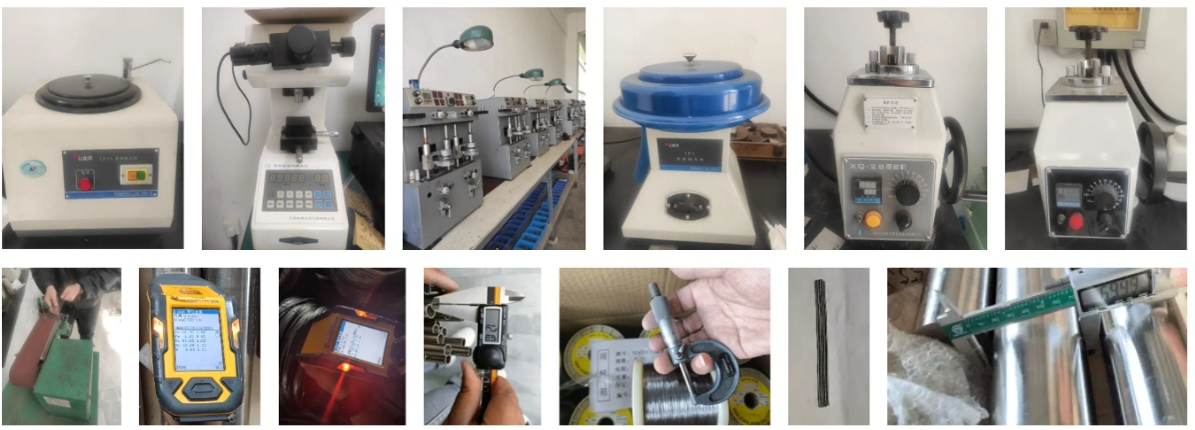
As industries evolve toward automation and digital control, the performance of heating elements becomes even more crucial. DZX’s NiCr strips are designed to support modern systems that demand stability, precision, and repeatability. Every batch undergoes strict quality inspection—from resistance testing to tensile strength measurement—to ensure compliance with international standards.
In conclusion, the NiCr Nichrome heating strip remains a vital material for industries that depend on reliable and efficient heat sources. With its balance of mechanical strength, corrosion resistance, and thermal stability, it continues to outperform many alternatives. DZX is proud to manufacture high-quality Nichrome alloys that help customers around the world achieve consistent production results while reducing operational costs and environmental impact.
If you’re seeking long-term performance and technical reliability, DZX NiCr Nichrome heating strips deliver exactly what your furnace or heating system demands—steady heat, high endurance, and proven quality.
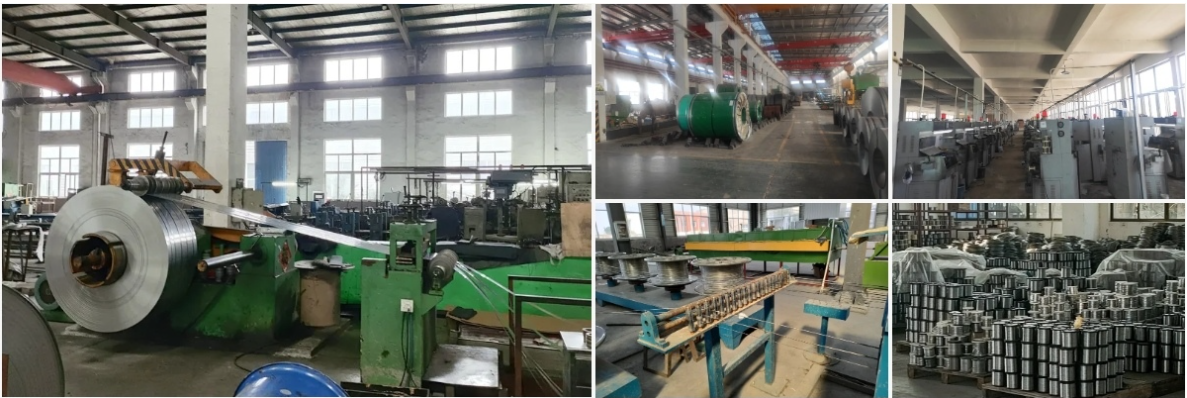
Our 12,000㎡ factory is equipped with complete capabilities for research, production, testing, and packaging. We strictly adhere to ISO 9001 standards in our production processes, with an annual output of 1,200 tons. This ensures that we meet both quantity and quality demands. Furthermore, all products undergo rigorous simulated environment testing including high temperature, high pressure, and corrosion tests before being dispatched, ensuring they meet customer specifications.For all our clients, we offer timely and multilingual after-sales support and technical consulting, helping you resolve any issues swiftly and efficiently.
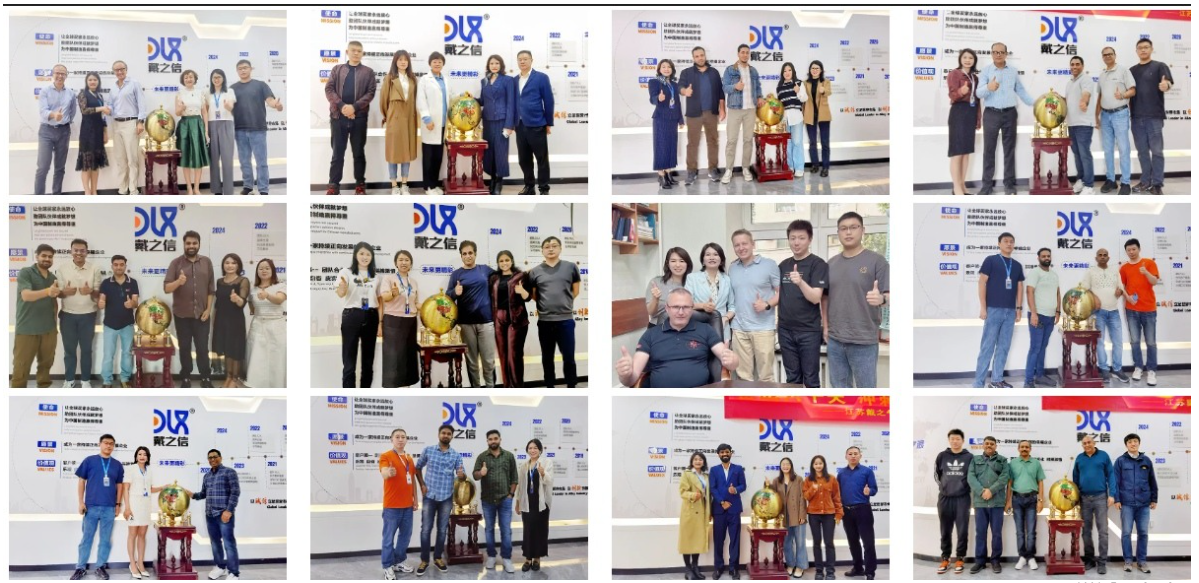
Client Visits
Building Stronger Partnerships
We support all kinds of testing:

FAQs
1. What is a NiCr Nichrome heating strip made of?
It’s primarily composed of nickel and chromium, typically in ratios such as 80/20 or 60/15, which balance strength, resistance, and heat stability.
2. What temperature can NiCr Nichrome strip withstand?
It can operate continuously up to around 1200°C, depending on the grade and working conditions.
3. How does it compare with FeCrAl heating materials?
NiCr offers better ductility and mechanical stability at high temperatures, while FeCrAl performs well at slightly higher maximum temperatures but is more brittle.
4. Is the NiCr strip corrosion-resistant?
Yes, it provides excellent resistance to oxidation and corrosion, even in humid or high-temperature environments.
5. Can NiCr Nichrome strips be welded or joined easily?
Yes, they can be spot welded, TIG welded, or mechanically fastened without losing significant electrical or mechanical properties.
6. What are the typical forms available?
It comes in strip, wire, ribbon, and sheet forms, suitable for coiling, punching, or assembly into heating elements.
7. How long does a NiCr heating strip last in industrial furnaces?
Lifespan varies by temperature and environment but typically ranges from several thousand to tens of thousands of operating hours.
8. Why choose DZX NiCr Nichrome strips?
DZX offers tight tolerance control, customized dimensions, and superior surface finish to enhance heat uniformity and energy efficiency in high-demand environments.


